One week after coming back from Tasmania it was once again time to board a plane. This time the direction of travel was almost the opposite of Tasmania, as I headed north-east towards the Sunshine State, which is also known as Queensland. Compared to all my earlier road trips, this consisted of guided tours instead of day hikes and mountain conquering. My first destination was the capital, Brisbane, where I was going to be first two nights. My accommodation was in the center of the city, so I would be close to interesting locations and the train connection to the airport. That way I also didn’t need to have the rental car for the duration in Brisbane. Originally for the first full day, I had planned and booked a day trip to a nearby Moreton Island, which included some kayaking, snorkeling, and sandboarding. Unfortunately, the organizer couldn’t get enough bookings for that day, so they offered me another day instead. But since I already had planned something for each day without backup days, I had to cancel that. As they contacted me about this on my arrival date, I had to find something else for the next day. Luckily I did find a good alternative trip for that day.
Day 1 – Arrival
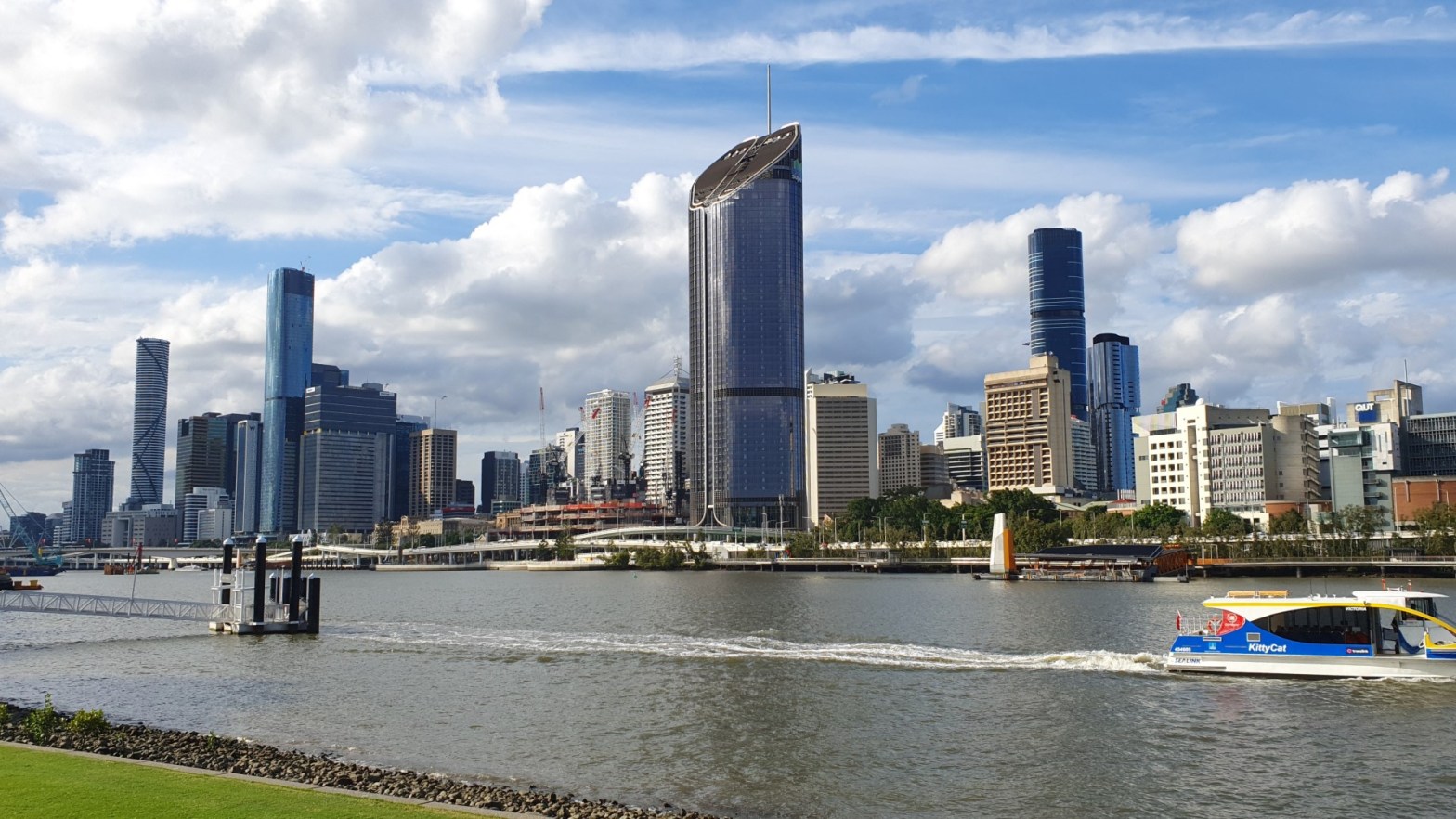
My flight arrived in Brisbane just after 12, which meant that I had plenty of time to walk around the city after I checked in to my Airbnb place. I headed towards the local Botanical Gardens to have the first look at more tropical flora and fauna. Surely not long after I got to the park I noticed the first local reptiles, the Australian water dragons, which were very plentiful in the park. It has been studied that those water dragons living in an isolated park in the middle of a big city have caused them to evolve a bit differently than in other places. Their population in Brisbane parks is also the highest densities for that type of water dragons in the world. I also got the first taste of a rainforest in a section in the Botanical Gardens. After going through that park I crossed the Brisbane River to walk the other side and have a good view of the CBD skyline. I noticed that this city has put effort into the bike routes along the riverside and with more time in the city, it would have been nice to see the city on a rental bike. Eventually, after sunset, I headed back to the accommodation. In another park on the way, there were a lot of fruit bats or flying foxes. Well, one of the fruit bat species is the flying fox.
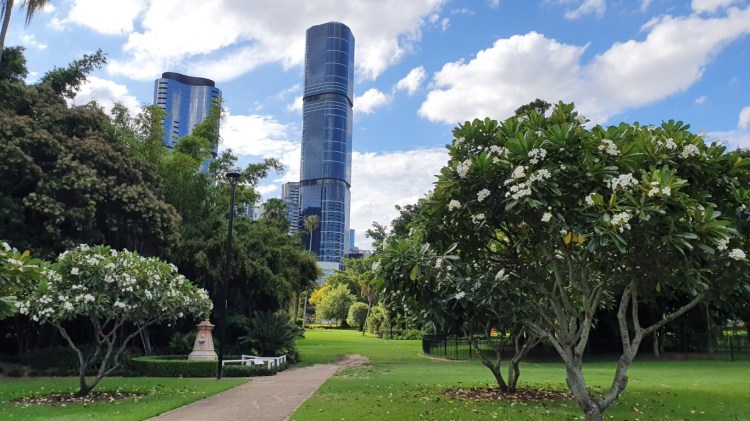
Brisbane Botanical Gardens 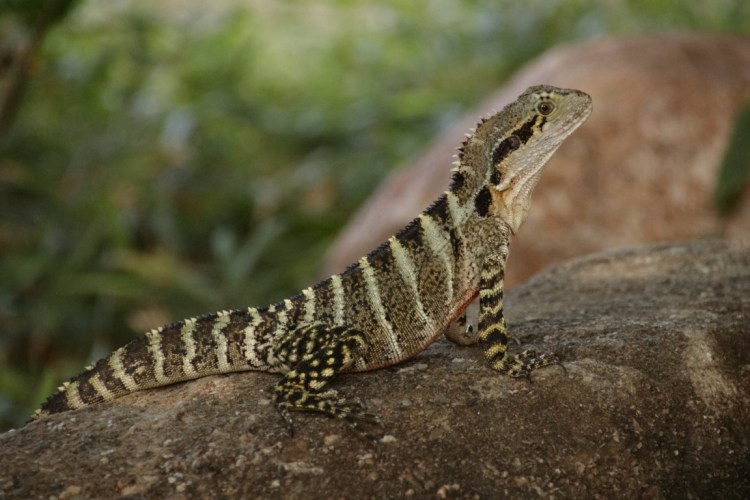
One of the Water Dragons
Day 2 – Moreton Island
The originally intended trip would have had an earlier wake-up than what the backup trip had, so as not so early bird I didn’t mind that. The pier that the trip departed from was a bit off from the center and as I was the only person that required transport from there, they instructed me to get an uber and reimburse the cost from the organizer later. The day seemed to be cloudy with occasional showers, so it wasn’t optimal for snorkeling. The difference to the original trip was that this included only snorkeling and some sea life spotting on the way. After about an hour boat ride later we arrived near the island, where for a while the boat captain steered the vessel slowly across reefs while trying to spot some sea creatures for us. At some points, we did see turtles popping their heads above the surface, but it wasn’t enough to get any photos of them. They seemingly also spotted some turtles underwater, but in the cloudy waters and a bit murky waters, I only saw darker spots among lighter sand areas. I could not make out of a turtle but I’m sure they were there.
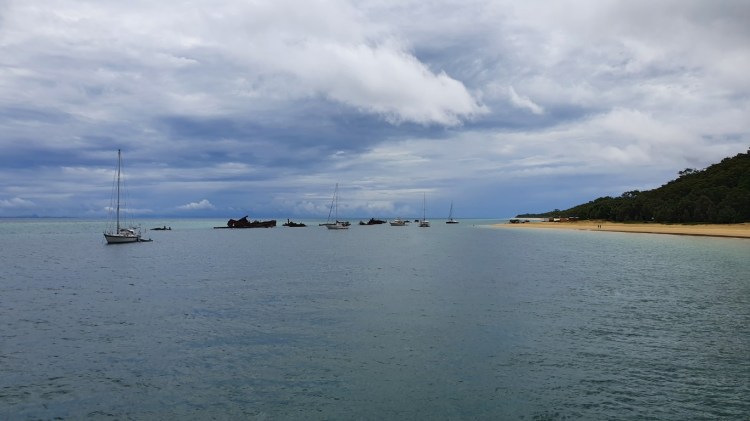
Tangalooma Wrecks in sight near the beach of Moreton Island
After a tasty lunch on the boat, it was time to change into swim gear, get the snorkel equipment, and grab the underwater camera. I also put a tube scarf on my head, as I learned from my previous snorkeling in the Maldives, that the head is vulnerable to the sun and it’s hard to use sunscreen there. First, we headed to the beach from the vessel and tried out the snorkels in the beach waters with fuzzy visibility. In a bit, the boat crew brought out the smaller boat that was better suited to shallow waters and we boarded. The snorkeling target was Tangalooma Wrecks, where almost 60 years ago 15 junk ships were sunken on purpose. The reason was to form a break wall for small boats to be anchored safely. In the decades the wrecks have rusted and cumulated coral becoming part of the reef. And as they still act as a break wall, it has fewer currents to have easier snorkeling and swimming.
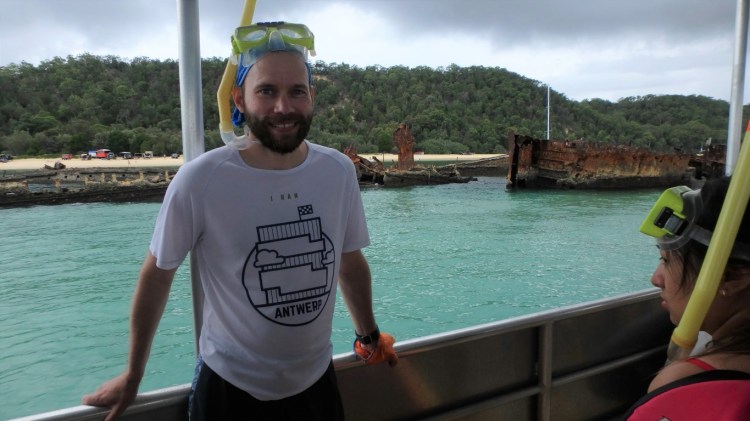
Ready to jump in the water
We were handed fins and also a rugged glove to one hand while snorkeling. Swimming among the wrecks has a high potential to get cuts to your skin as the wrecks have a lot of barnacles attached and those things have very sharp edges. The glove is for the snorkeler to be able to grab the wreck and push away to avoid being cut. Snorkeling in the wrecks happened with tour guides in the front and the back with all the snorkelers in between. It meant in some points it required very careful movement in narrow spots with sharp edges as it got crowded occasionally. Not so nice when comparing to snorkeling just yourself without the worry to either headbang someone or hit them with the fin. The weather didn’t improve and the sea was a bit in motion, which meant that the visibility underwater without the sun wasn’t the greatest. There was plenty of fish there, but of course, the colors are a little dull without enough light. But it was an interesting setting for snorkeling nevertheless. After about 40 minutes of snorkeling, we climbed back to the small boat that then headed towards the main vessel. As it was cloudy, windy and the temperature wasn’t so high, I got a bit chilly in the boat. I had left my towel in the main vessel so I just had to endure and let the cool wind dry.
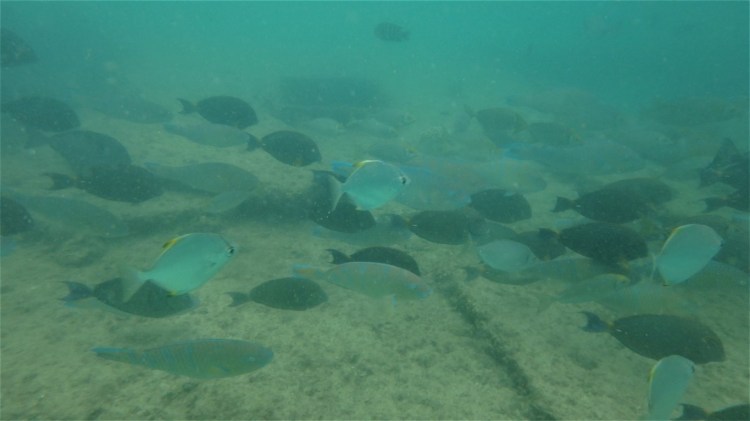
School of fish in murky waters 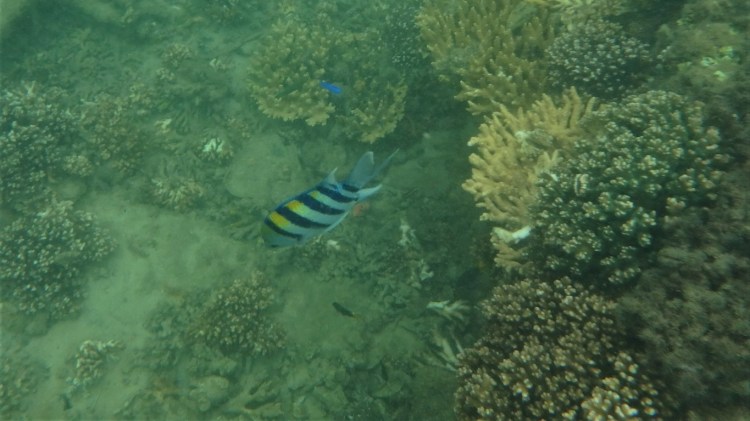
Also some colorful fish
On the way back we did see a few dolphins but they didn’t hang around so long to get any good photos of them. Well, at least we saw a glimpse of them as the title of the trip was “Dolphin and Tangalooma Wrecks Cruise”. Some of the participants were from the Gold Coast and one of the guides who was giving them lift in a minibus also gave me a lift back to Brisbane. Back in the city, I was already quite tired so I just had a delicious dinner at a Brasilian restaurant and went to relax in the accommodation.
Day 3 – Drive to Bundaberg
It was time to get the train back to the airport, but not to get a flight. Instead, I called the rental company to get me picked up from the terminal as the car rental place wasn’t next to the airport. The rental company was the same as what I used in Tasmania and also the car I got was the same model, a compact Hyundai. Compared to the car I had in Tasmania, this one had one annoying issue. The tires were a little imbalanced, which caused a slight vibration. It resonated when I drove about 50km/h and when I drove about 105km/h, it resonated with a louder and higher pitch to make me avoid those speeds. Luckily they were very narrow areas where it happened, so I could avoid them easily. I deduced while driving that my educated guess about the imbalanced tires wasn’t a reason enough to call the rental company but instead I would monitor the situation if the symptoms stayed like this.
I had a little over four hours of a drive ahead and I had tried to find some easily accessible lookout point along the way that wasn’t going to add too much time to the journey. Driving the smaller roads here does tend to be more treacherous after dusk as the animal activity picks up when the sun sets, which is the reason that it’s a good deadline to reach the destination during daylight. Especially with my small car without any bull bar to take the hit. I did find out of one place to go check out along the way. It was a lookout point to Glass House Mountains, which are isolated peaks that raise from the otherwise flat terrain and they were formed about 26 million years ago by volcanic activity.
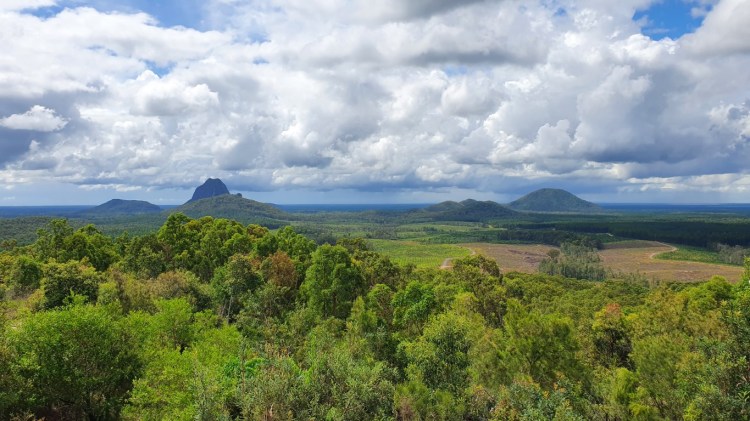
A few peaks of Glass House Mountains
I arrived at my destination a little past four in the afternoon well before sunset. The place I was going to stay a couple of nights wasn’t an Airbnb place this time. I went to visit a friend from my childhood who was back then in our home in daycare and since had settled to this side of the world. It was probably 25-30 years since we last saw each other. The day before I drove there, she advertised the place of having kangaroos, wallabies, green tree frogs, and also a couple of meters long python, who has been living under their terrace. That is a great sales pitch if any. 😄 Well I would rather have a python as my neighbor than some poisonous snake. And they also have six cats, which means that it hasn’t caught a meal out of them. But I guess there are enough small animals to catch in the outback. Occasionally it has left a spare skin in their garage from molting, which they showed me.
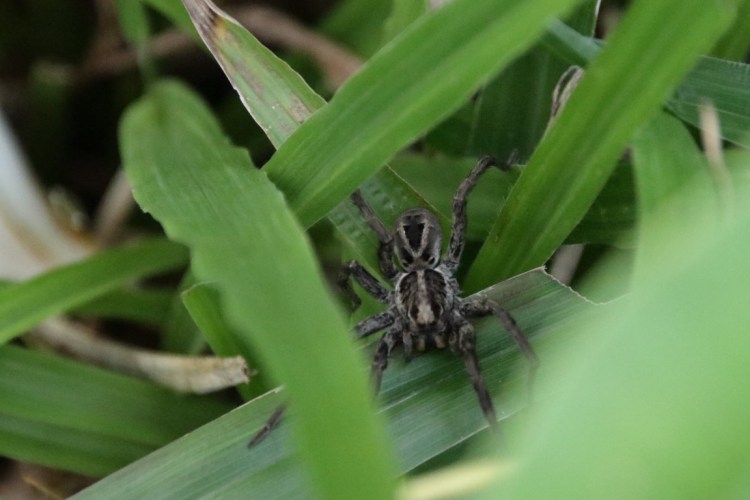
Wolf Spider lurking in a plant 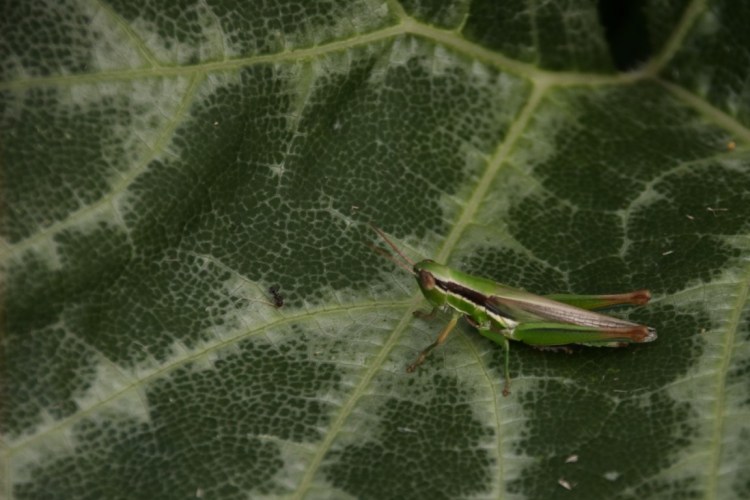
One of the many grasshoppers
After the sunset, the green tree frogs came out of hiding and they seemed to be everywhere. I was just sitting on the back terrace and I heard a thump and there was one frog in a plant pot right next to me. They went on the walls and climbed on top of cars and so on. Even though they are vivid green in color, they aren’t poisonous and people even keep them as pets. Another wondrous sight in the darkness was the number of stars that could be seen. It’s so remote location that there isn’t much light pollution and it might be the first time I could easily make out the Milky Way. Too bad I hadn’t brought a good lens for my camera, which might have been able to catch the starry sky nicely.
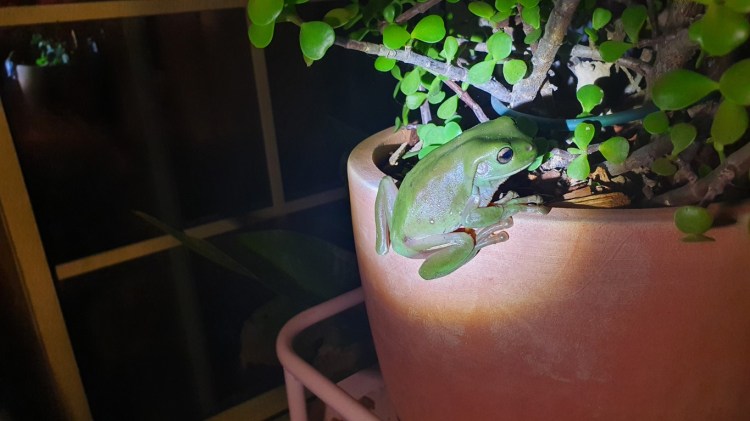
On of the green tree frogs
Day 4 – Local sights with a hint of rum
What would be a better way to start the day than to visit the local Bundaberg Rum distillery. It has over 130 years of history that includes two production stoppages caused by fires. This award-winning rum is however mostly enjoyed within Australia. They do export some overseas but a big percentage will be consumed within the country and from there, most are enjoyed within the state of Queensland. We had a guided tour through the distillery, where the production area was surrounded by an electric fence with barbed wires. They have so huge amounts of rum in huge barrels so they are very protective of it. Also, they want to protect it against fires as the second fire in 1936 pretty much destroyed the whole distillery. At the beginning of the tour, we had to put all electronics that contained a battery in a locker, to prevent any chance of spark. That also meant that we couldn’t take any pictures inside the distillery production facility. One of the three ingredients of the rum is molasses, which is produced from sugarcane. They had about 5 million liters of it in a tank inside one building. The air was full of the smell of it and we even got a taste of that sugary sticky stuff. It was an interesting tour and a good continuation to a visit to Bacardi 1,5 years ago near Barcelona. After the tour, it was of course time for rum tasting and it wasn’t even noon yet. Out of the two glasses, I of course selected the most expensive rum for one and the other was a nice liqueur with a bit of milk.
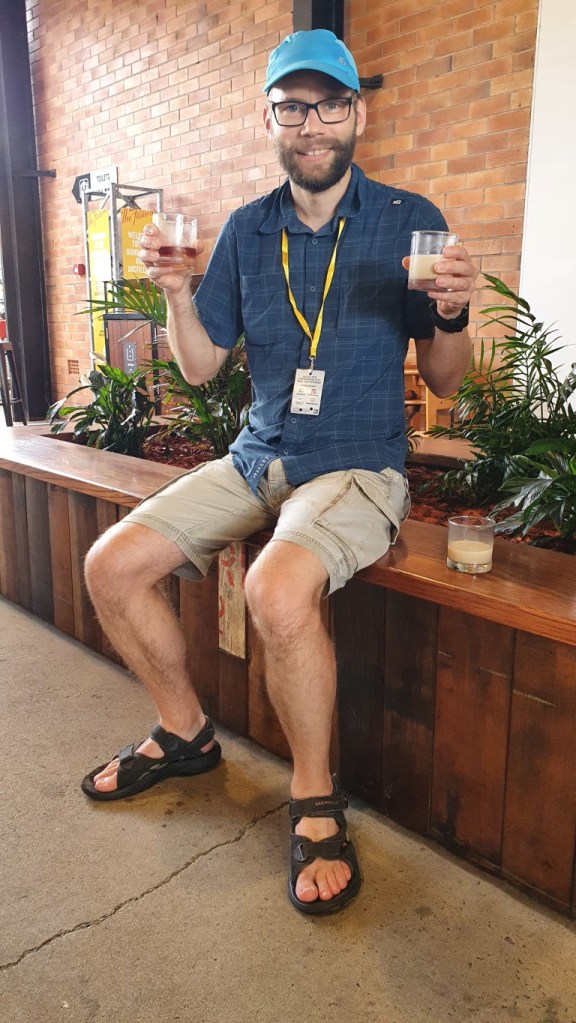
Tasting the stuff 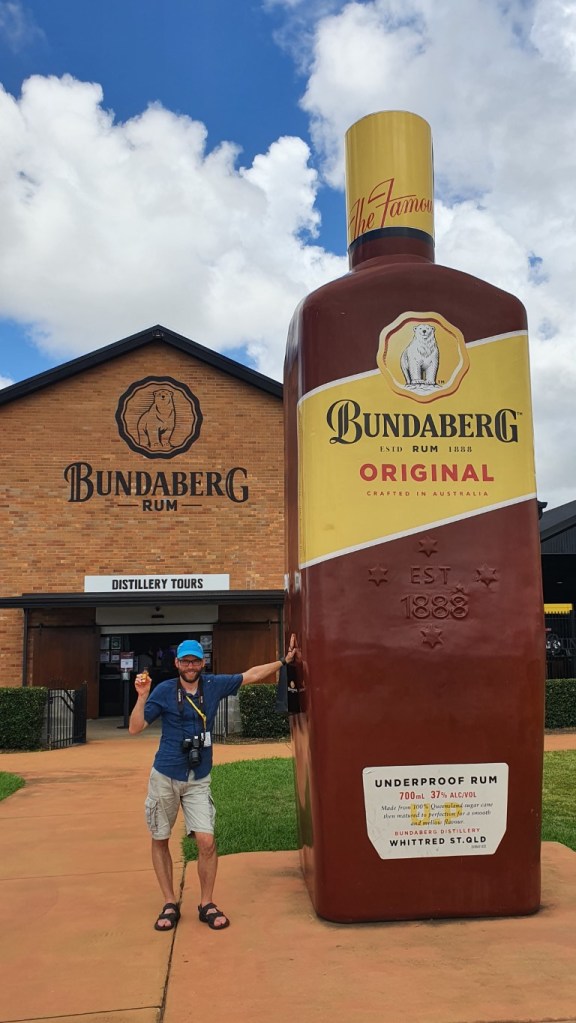
Small bottle and a slightly bigger bottle
After the tasting, we went to tour the town of Bundaberg and had a quick sushi lunch. Then we drove to a nearby beach to check out rock pools that are revealed in low tide and can contain some sea life trapped waiting for the next high tide. The beach was riddled with small round pellets of sand. They are caused by soldier crabs, which are very small species of crab that lives in the beach sand. During low tide, they come out of the sand and dig in for the duration of high tide. In the distance, they could be seen with huge hordes but as soon as we walked near them, they first run away and then dug themselves into the sand with swirly motion.
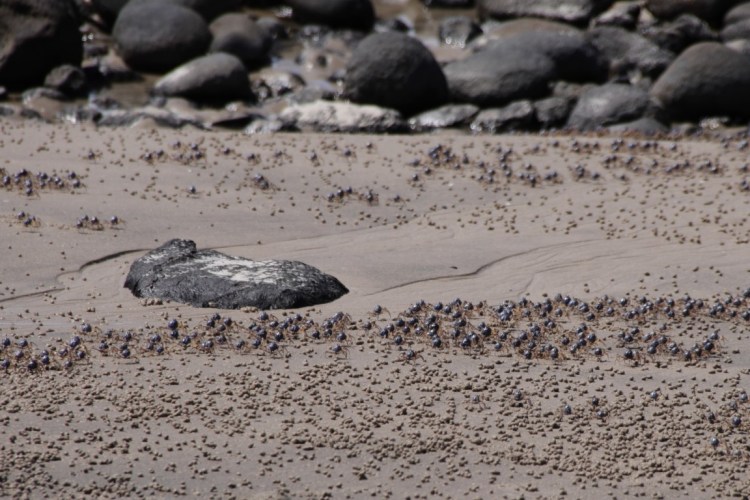
Schools of soldier crabs leaving the small round pellets behind
On the way back to my friend’s place we stopped at a nature park and walked about a one-kilometer walk trail there. It was a nice walk in a quiet forest where the trail went to a nearby creek. Later in the afternoon we drove to the beach and walked almost two kilometers to a river mouth with great timing. The sun was just setting behind the river and I got a few good photos of the sunset. After the walk back to the car it started to be quite dark but before we headed back, we drove a bit in the dark along a country road close to a farm that owners my friend and her husband knew. We walked a bit further with flashlights and tried to see some nightlife in the bushes. Then we saw that car headlights came closer from the house. A couple who lived there just came with the car along their road to check that who moves there based on the lights of the car and the flashlight beams. After they recognized my friend, we chatted a while there and then they turned and drove back. We also headed back for the day. When we got to the house we found out that one green tree frog had hitchhiked on the hood of the car.
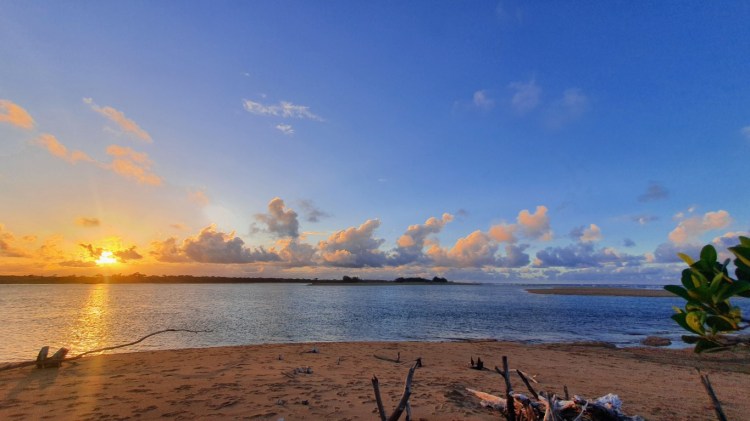
Sunset over the mouth of Burnett River 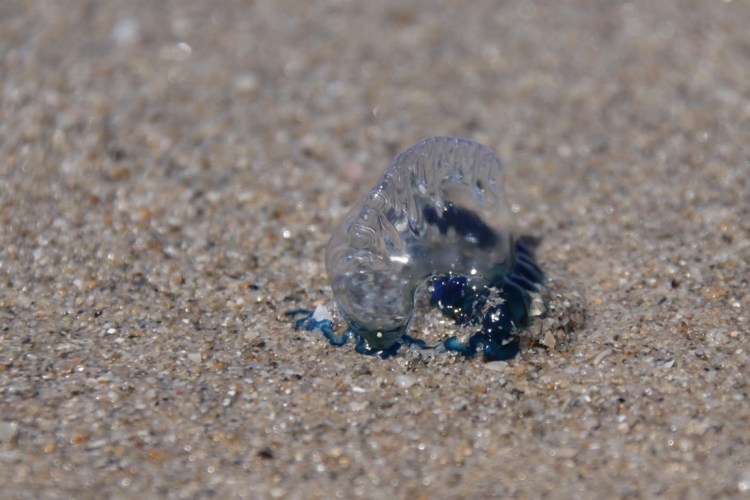
Beached blue bottle, also called the Portuguese man o’ war, which you want to avoid in the water
Day 5 – To the skies and a historic town
I wasn’t in any hurry to start driving back south as I didn’t have any sights on the way I wanted to see. We had an easy morning but before noon we had quite a special ride waiting for us. It was a nice addition to all the vehicles I would use during my trip. This time none of us was going to be in the driver’s seat, or rather the pilot’s seat as the vehicle was a small four-seat helicopter. Just before I came to visit, my friend had learned that there is a local helicopter tour company operating just ten minutes away from their place. They had picked a five-minute flight but that was plenty to see the nearby area towards the beach from a higher point of view. In the front seat next to the pilot I had an unobstructed view to my side as there was no door beside the front seat. As I sat on the left side and my phone was in my left pocket, I chose not to get the phone mid-flight and just took pictures with my big camera. It wouldn’t be nice to drop the phone in the middle of a forest some river.
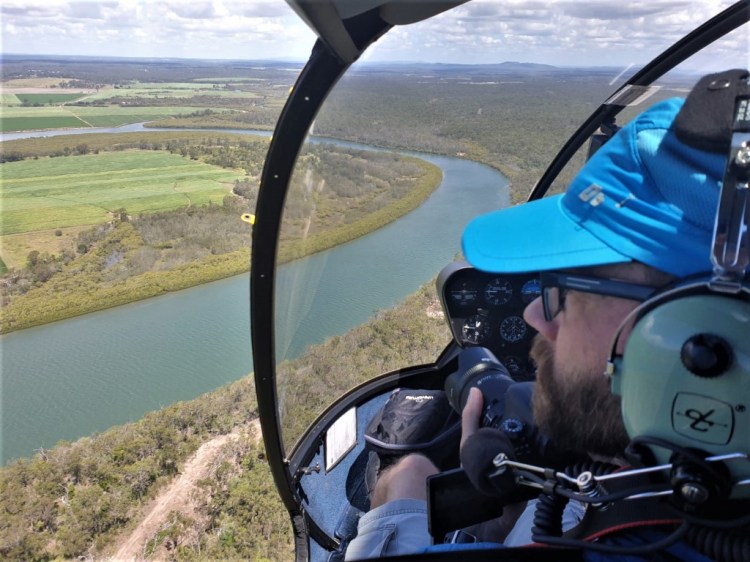
Looking for the next photo opportunity 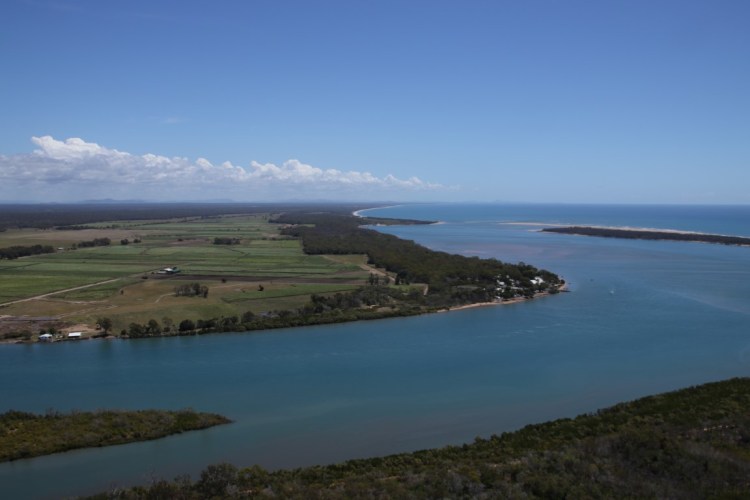
The view over Yandaran Creek where it meets the ocean 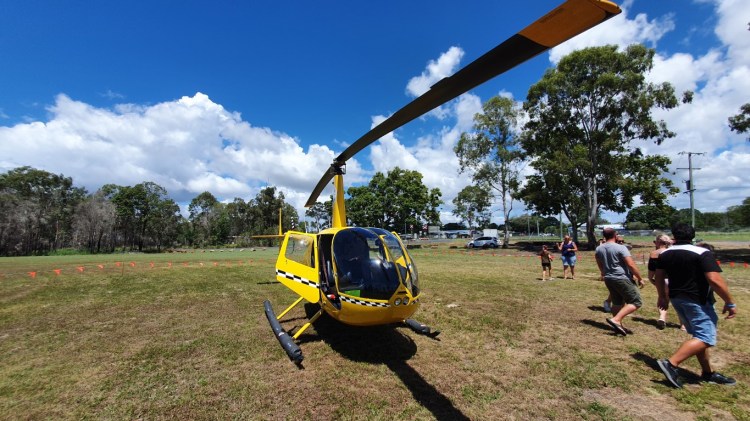
The ride in the sky
After the flight, we decided to go visit a nearby town. Well, being nearby is relative as the town was about 100km away. The place is where James Cook made the second landing in Australia back in 1770. The name of the town has been carefully thought through and some imagination used, as the name of it is 1770. Officially Seventeen Seventy, but still locally known as the numbers. That might be the first time I have been in a town that is named after a year, or even after a number altogether. We headed there to a lookout in a headland where we walked a bit and admired the nature and scenery. At one point we descended a steep path to rocks near the waterline. The rocks were littered with hard barnacles and some secluded rock pools had a few bigger crabs waiting for the high tide. Waves were also splashing occasionally spectacularly against the rocks.
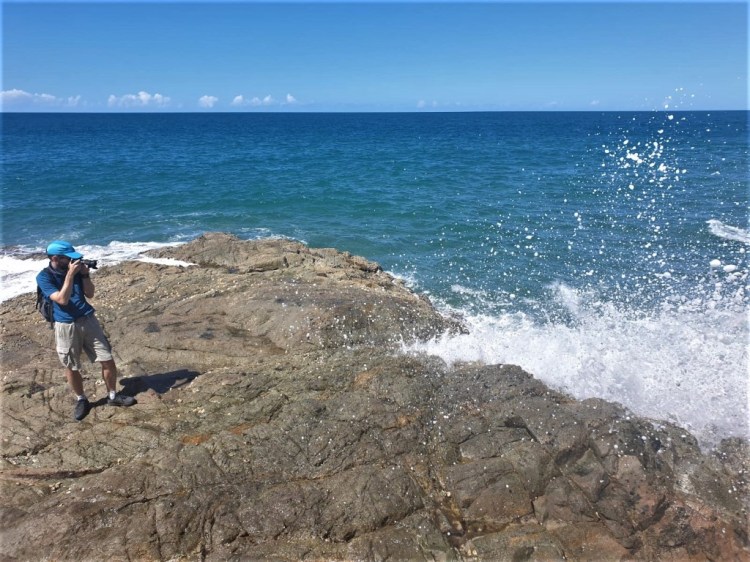
Trying to capture the splash 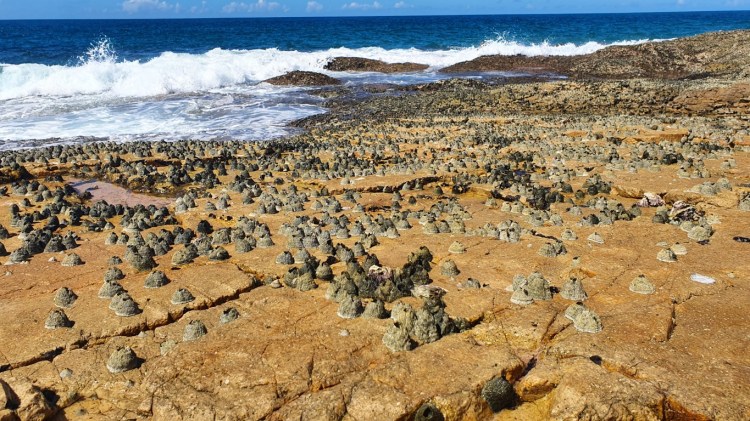
Rocks littered with hard-shelled barnacles
Then we realized that we were a bit behind the original schedule of my departure because the drive to the town of 1770 was quite long. But that was fine as I still could drive the smaller roads during daylight and the motorways are safer to drive after sunset. Soon after we arrived back at my friend’s place, I packed the car and started my drive back. My next place to stay the night was a little over halfway between Bundaberg and Brisbane as I had a tour booked for the next day close to the town of Noosa.
Day 6 – Canoeing
After a tasty breakfast in a nearby town, I drove to a nearby Lake Cootharaba, where the Everglades Eco Safaris was located. The Noosa Everglades here is one of the two Everglades systems in the world with the other one being the more famous one in Florida. This meant that I had now been in all Everglades systems in the world as I visited the one in Florida eight years before. First, we boarded a boat to cross the very shallow lake, which has an average depth of 1,5 meters. So at some points, you could cross the lake by walking in the water. Even navigating a boat there takes good knowledge of the paths where the propeller won’t hit the bottom. After the lake, started the Noosa Everglades river systems, also known as the River of Mirrors. That name comes from the beautiful reflections from the water in still conditions. On the way to our first waypoint, we spotted some cormorants and pelicans.
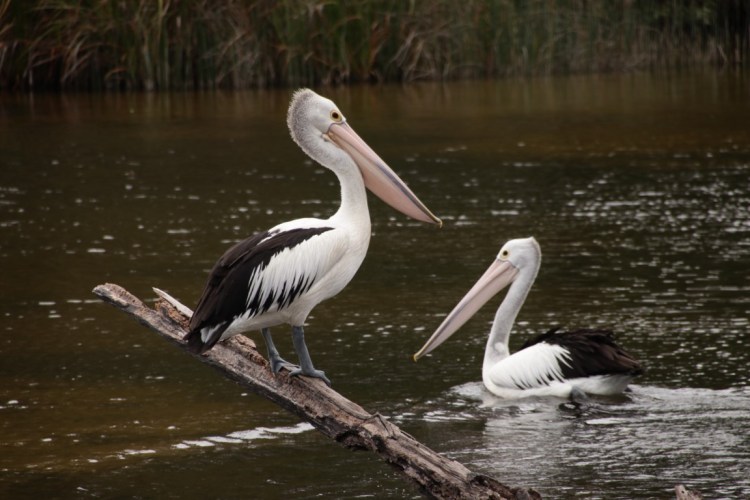
Couple of pelicans 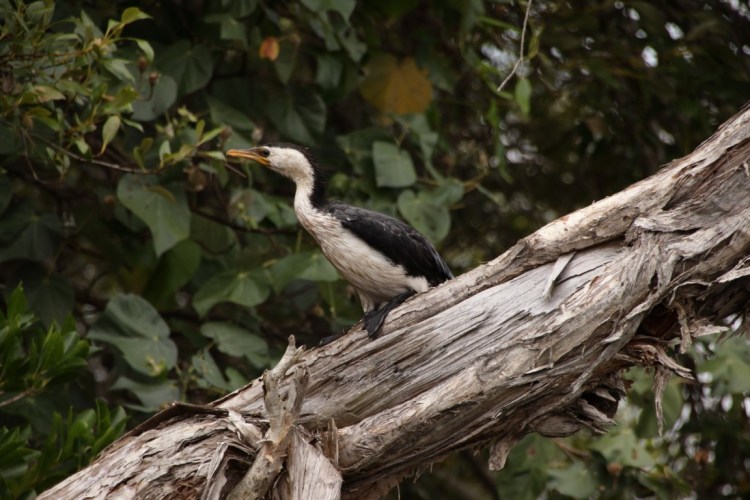
Some kind of cormorant
We went to shore on a camping area where the canoes were waiting for anybody wanting to paddle the next 5 km along the Noosa River. They were open-top canoes that were operated with at least two paddlers. I guess you could manage one with yourself, but it wouldn’t so easy. Luckily there were three other volunteers besides me who wanted to take a canoe, so I got a fellow paddler to my canoe. The weather was cloudy but fortunately, there wasn’t too much wind. It was an upstream paddle, but the current was very mild so it was very relaxing to paddle as it didn’t require constant steering. The endpoint of the paddling was near a place called Harry’s Hut, which was built in 1957 to accommodate timber workers during their week-long work stretches. After having some tea and snacks and also spotting a big over a meter long lizard called a Lace Monitor, we boarded the boat to start the way back.
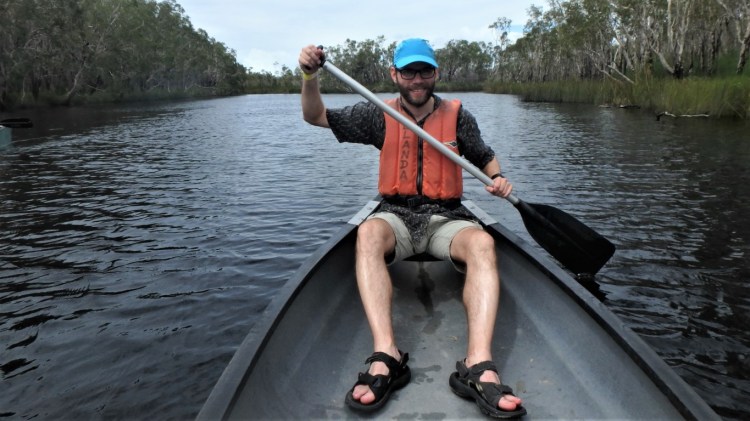
Paddler in action 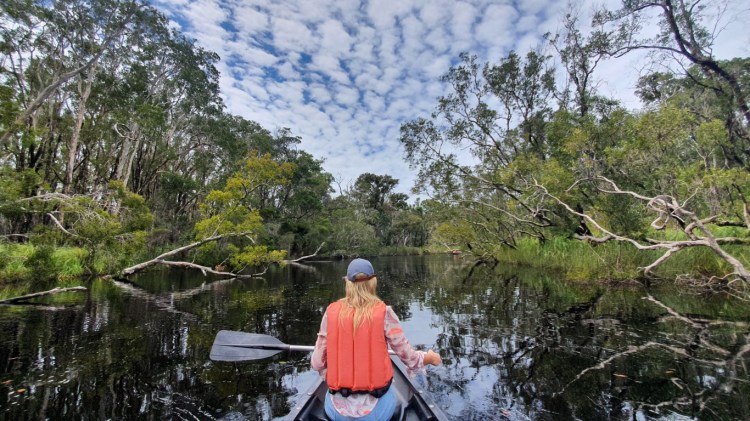
The still waters of the River of Mirrors 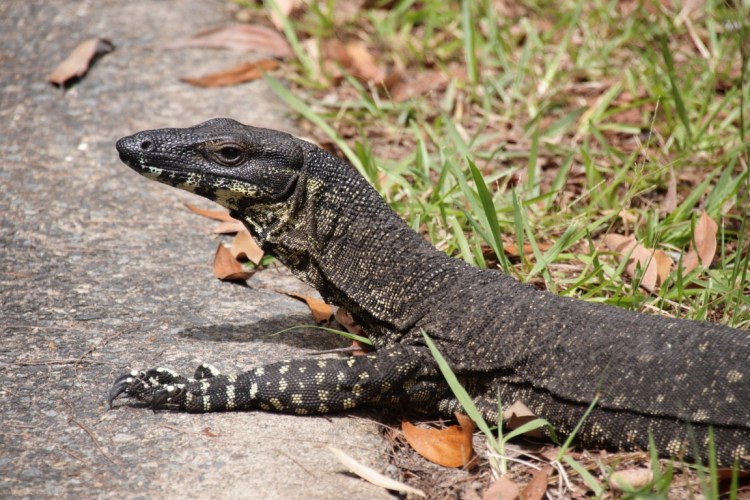
Lace Monitor
On the way back it started raining and also the wind started to pick up. When we got to the river mouth overlooking Lake Cootharaba, there were whitecaps on the waves, so if we would have paddled from the starting point, it would have been impossible to complete the return journey as it was a headwind all the way. We even picked up one kayak with the paddler to the boat as that return trip ended there because of the wind. When we got back to the point of departure after a bouncy ride against the wind and waves, we had lunch in a bistro that was part of the camping grounds there.
After photographing a group of herding wild kangaroos at the camping grounds I started to head back to Brisbane to drop off my rental car. Since I had a good amount of time to drive, I chose the coastal route towards Sunshine Coast. Despite the name, it rained the whole way. I felt a bit disappointed as the name wasn’t descriptive of my experience of it. 😄
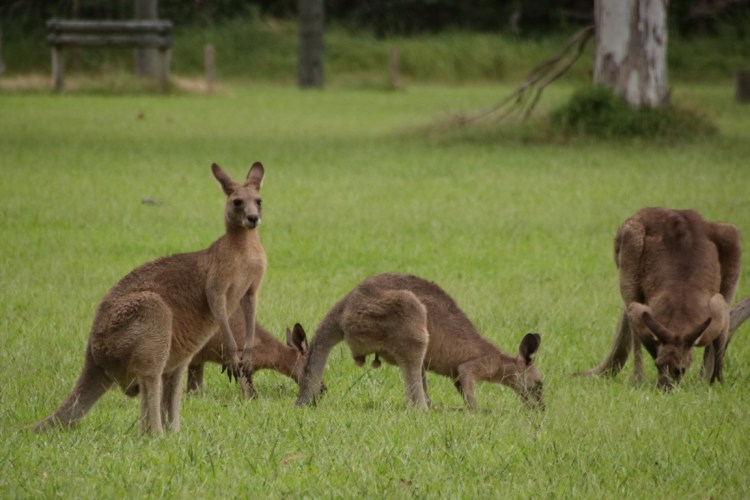
Kangaroos grazing while one keeps watch of the suspicious photographer
After returning the car, I again took the train back to the Brisbane center. My accommodation this time was a very nice apartment on the 12th floor with a big balcony.
Day 7 – Not tropical enough
Today it was time to jump onto a plane again, but before I did that, I had some time before I had to get on the train towards the airport. After dropping my luggage at a storage service, I headed to Roma Street Parklands. I already visited that park on the arrival evening, but there was a special fenced garden section that had already closed then. Now during in the middle of the day, it was open so I went to check it out. It was a very nicely kept and beautiful garden so it was worth the second try.
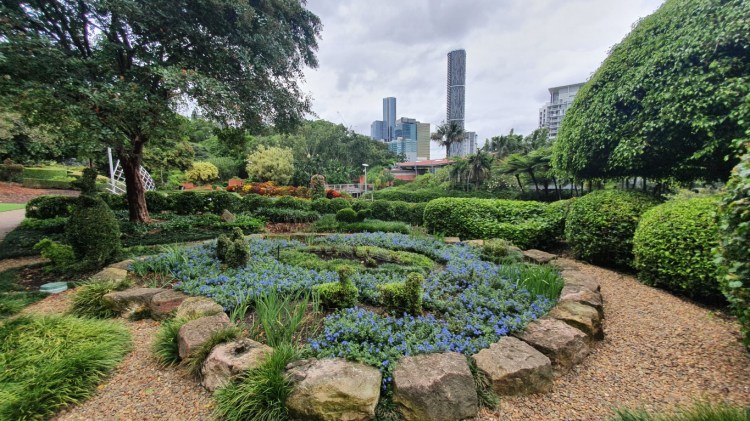
Spectacular Garden in Roma Street Parkland 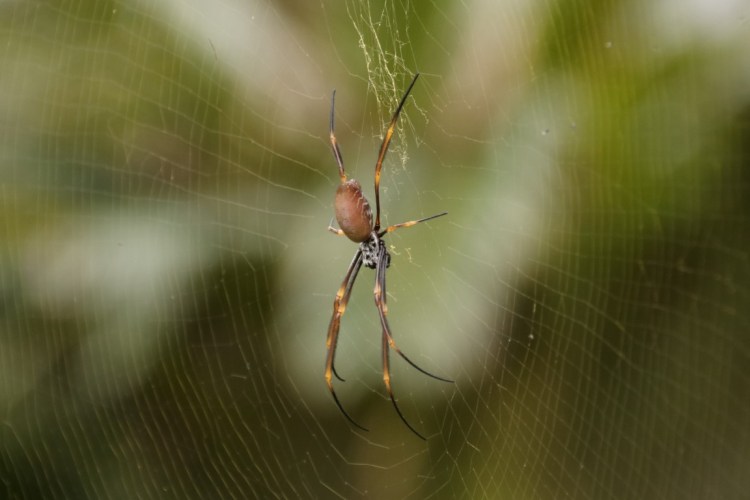
Golden orb-weaver
The Airbnb host I just had checked out from was very informative on the city and how to move there. In the messages, I learned that in addition to some buses in the CBD being free, also one route in the river was free to use. I decided to try that out and get the view of the city from the waters. It was a nice change to be able to just stay put while the scenery is changing after much walking. After the boat traversed to the other side of the CBD, it was time to head to the airport.
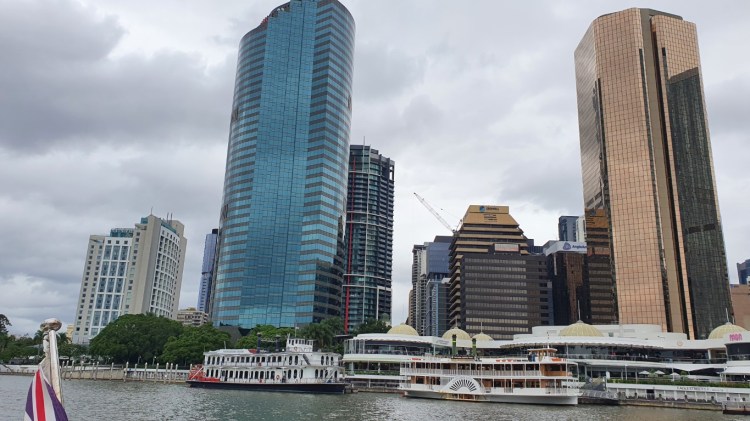
CBD view from the Brisbane River 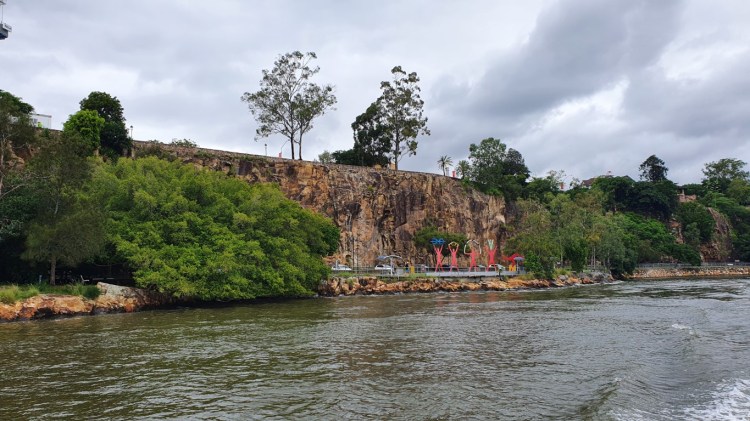
Kangaroo Point Cliffs from Brisbane River
To be continued in the next post.
 Jone's adventures Down Under
One thought on “To the Sunshine State”